



In sports like rugby, soccer, hockey and even netball, head injuries leading to concussions are fairly common. Concussion is defined as a disruption of normal function and would normally resolve in 24 hours. They normally arise either with a clash of heads or when the head bounces off the ground.
As the brain is “floating” in the cerebral fluid within the skull, the sudden, quick movement of the head could cause the brain to move and come in contact with the skull. If the impact is hard, it may cause bruising of the brain, leading to a concussion.
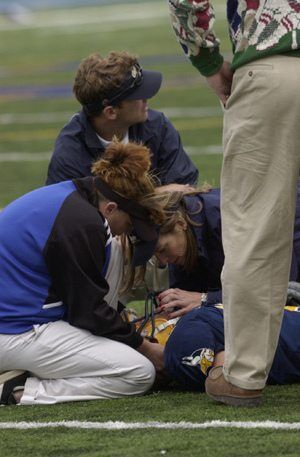
Depending on the extent of the concussion, the signs and symptoms may vary.
In a mild concussion,
In a moderate concussion,
In severe concussion,
It is advised for anyone to observe for these symptoms for at least the first 24 hours following the incident. In certain cases, these signs and symptoms may arise up to 72 hours post-injury so close monitoring maybe required. If an athlete has 2-3 bouts of mild to moderate concussion in a season, they are normally advised to retire from the season and even possibly to retire completely if 2 bouts of severe concussion. There are times where these symptoms may persist for up to a year or more. In these cases, they are classified as having post-concussion syndrome.
Post-concussion syndrome would include symptoms like headache, disorientation, sensitivity to light and/or sound, difficulty with attention and memory, anxiety and in some cases, depression. These symptoms normally peak at about 4-6 weeks post-incident, and some even last for years.
The best way to manage it is rest. Rest for about 1 week. If the athlete remains symptom free during that duration of rest, he/she would be allowed to return to sports. The return to sport has to be gradual and closely supervised by a physiotherapist or physician. However, the athlete must stay symptom free for a month before returning back to sports. This is if it is a repeated incident.
We’ll be covering the on-field management of concussion and head injuries in the next article, On-field management of Head Injuries and Concussion.